
Enlarged pore
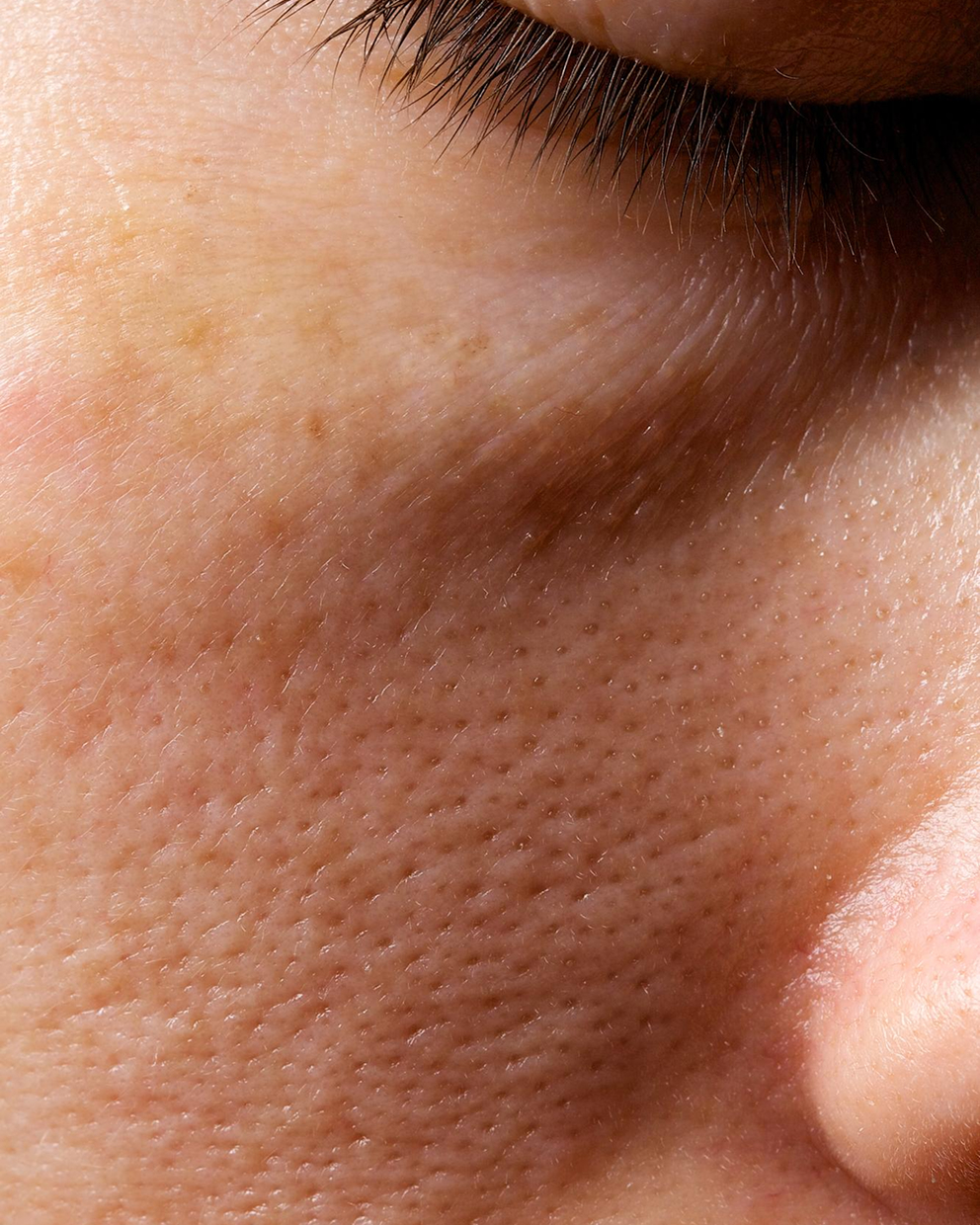
What are Enlarged Pores?
Pores are tiny openings on the skin that allow natural oils (sebum) and sweat to reach the skin’s surface. They play an important role in maintaining healthy skin by helping to lubricate and protect the skin barrier.
While pore size is largely determined by genetics, pores can become more noticeable when they produce excess oil, become congested, or lose the surrounding collagen support that helps keep them firm and less visible. Although pores cannot be permanently closed, their appearance can be minimised by improving skin quality, collagen support, and overall skin structure.
What Causes Enlarged Pores?
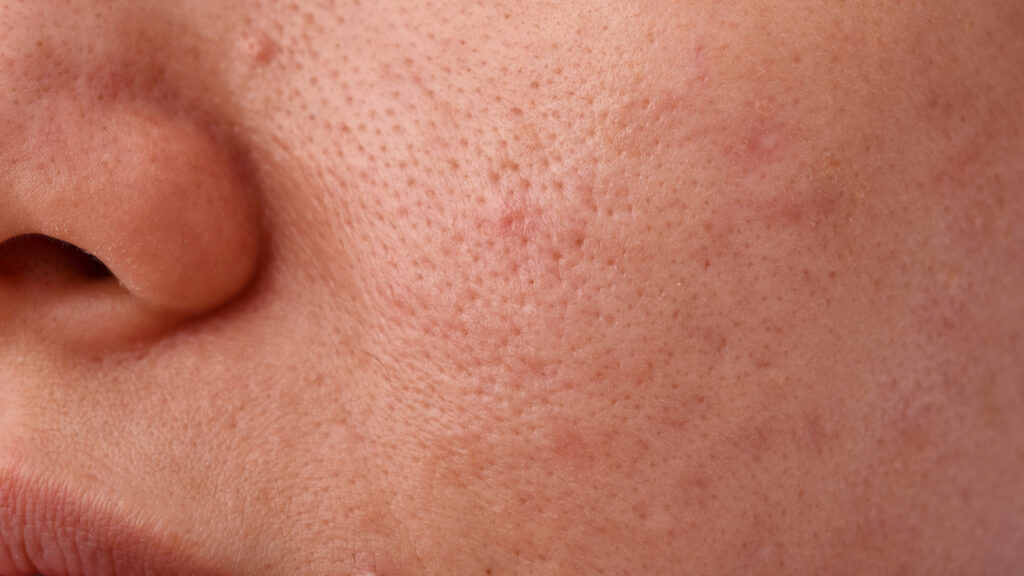
Enlarged pores are not simply caused by oily skin. Their appearance reflects changes happening beneath the skin, where oil production, collagen support, skin renewal, and elasticity all play an important role.
Overactive Sebaceous Glands
Each pore is connected to a sebaceous (oil) gland that produces sebum to protect and lubricate the skin. When these glands become overactive, excess sebum accumulates within the pore, causing it to expand and become more noticeable, particularly in the T-zone.
Reduced Collagen & Skin Support
Within the dermis, collagen and elastin provide structural support around each pore. As collagen production gradually declines with age and sun exposure, the surrounding skin loses firmness and elasticity. Without this support, pores are less able to maintain their shape and may appear larger over time.
Slower Skin Renewal
The epidermis naturally sheds dead skin cells and replaces them with new ones. When this renewal process slows, dead skin cells can accumulate around and within the pores. Combined with excess oil, this contributes to congestion, making pores appear wider and more prominent.
Loss of Skin Elasticity
As the skin ages, its ability to stretch and recoil gradually decreases. This reduction in elasticity makes pore openings less able to contract after sebum is released, resulting in pores that remain visibly enlarged.
