
Stretch Mark
What are Stretch Marks?
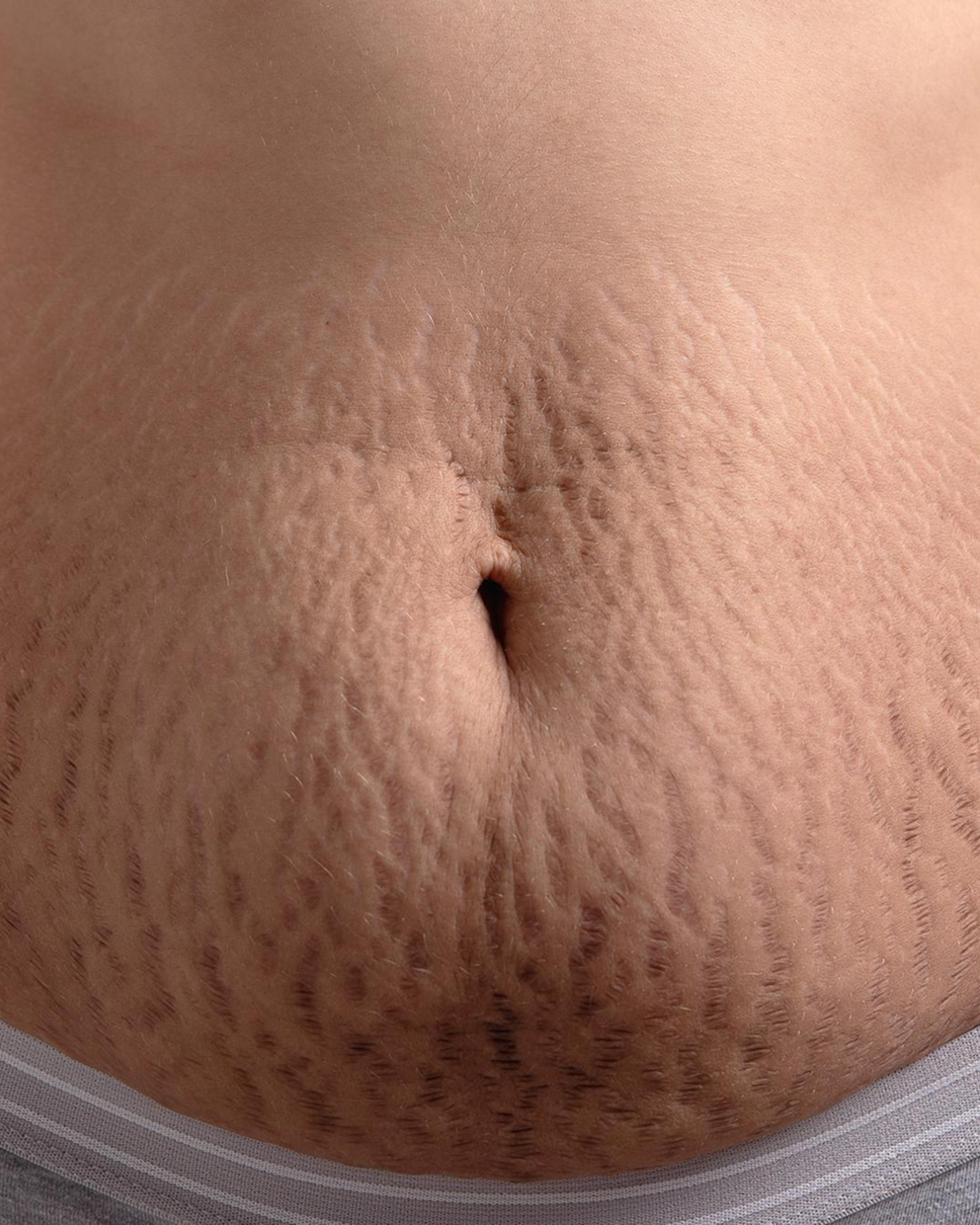
Stretch marks, medically known as striae, are a form of dermal scarring that develops when the skin stretches faster than its collagen and elastin fibres can adapt.
As the skin expands rapidly, these supportive fibres become damaged or torn, resulting in visible linear marks that gradually change in colour and texture as they heal. Stretch marks commonly appear on areas where the skin experiences significant stretching, including the abdomen, thighs, hips, buttocks, breasts, upper arms, and lower back.
What Causes Stretch Marks?
Rapid Growth During Puberty
Growth spurts during adolescence can place sudden tension on the skin, leading to stretch marks on the thighs, hips, back, or shoulders.
Pregnancy
As the abdomen and breasts expand during pregnancy, the skin stretches significantly, making stretch marks particularly common during the second and third trimesters.
Weight Changes
Rapid weight gain or significant muscle growth can increase tension within the skin, causing collagen fibres to break.
Hormonal Changes
Hormones such as cortisol may reduce collagen production and weaken the skin’s connective tissue, increasing susceptibility to stretch marks.
Genetics
Some individuals naturally have lower skin elasticity or inherited differences in collagen structure, making them more prone to developing stretch marks.

The Difference Stage of Stretch Marks
Striae Rubra (Early Stretch Marks)
Striae rubra are newly formed stretch marks that appear red, pink, purple, or reddish-brown depending on skin tone. At this stage, the skin is still actively undergoing inflammation and repair. Blood vessels beneath the skin remain visible, and collagen remodelling is still occurring. Because the tissue is more biologically active, early stretch marks generally respond better to treatment.
Striae Alba (Mature Stretch Marks)
Over time, stretch marks gradually become white, pale, or silvery in colour as inflammation subsides. These mature stretch marks represent areas where collagen and elastin have already been permanently altered. They often appear thinner, slightly depressed, and have a scar-like texture. Although complete removal is not possible, collagen-stimulating treatments can help improve their appearance by enhancing skin quality and reducing textural differences.
